

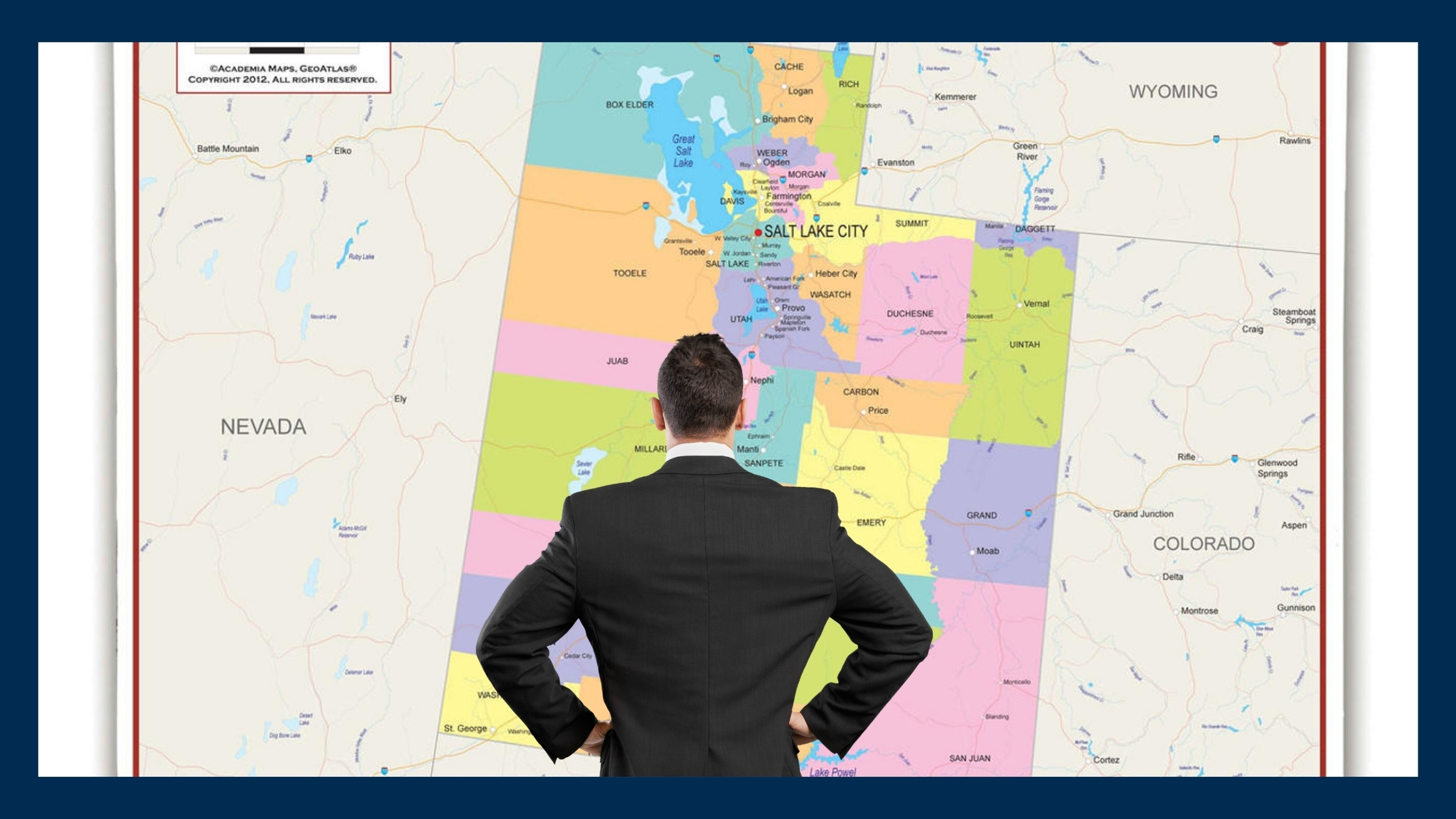

- Why Out-of-State Buyers Are Targeting Utah Businesses
- What Are Utah Business Valuations Actually Worth?
- Case Study: The $7M Expectation That Became $3.5M
- How Do Regional Differences Affect Utah Business Sales?
- Salt Lake City and Wasatch Front
- St. George and Smaller Markets
- Why Utah Business Brokers Are Critical in a Hot Market
- Which Utah Industries Are Getting Premium Valuations?
- Why Manufacturing Is Attracting Buyers
- How Does Utah Culture Affect Deal Structure?
- Case Study: Legacy Over Cash
- Four Critical Preparation Steps
- Frequently Asked Questions
- How much is my Utah business worth?
- Why are out-of-state buyers interested in Utah businesses?
- What’s the biggest mistake Utah business owners make when selling?
- Does location within Utah affect business valuation?
- How long does it take to prepare a business for sale?
- What industries are getting premium valuations in Utah?
- Should I accept seller financing?
- When should I start preparing to sell my business?
I’m Michelle Regner, founder of Business Brokers of America. I help business owners navigate every step of the sale: from organizing financials to negotiating the right deal, so they feel supported, informed, and in control. My mission is simple: to make sure you exit on your terms, with confidence, clean financials, and a strategy that protects what you’ve built.
Deal volume in Utah has more than doubled in the last five years. Most business owners I talk with don’t realize this. They’re still operating under old assumptions about who’s buying, what’s selling, and what their business is actually worth.
Wondering what your business is worth?
Get a personalized valuation backed by real market data.
Start your free valuationThe data tells a different story. M&A transactions in Utah jumped from 120 deals in 2023 to 239 in 2024. That’s not just tech companies or venture-backed startups. It’s plumbing businesses. HVAC companies. Insurance agencies. Wealth management firms.
The surge is happening in service businesses that most owners assume nobody wants to buy. But here’s what catches people off guard: even if you operate your business in one local Utah market, you’re likely on the radar for national buyers.
At Business Brokers of America, our Utah business brokers are helping sellers across Salt Lake City, Provo, Ogden, and St. George navigate this new wave of buyer demand and understand what their businesses are truly worth.
Founded here in Utah, Business Brokers of America has deep roots in the local market. What began as a regional brokerage has grown into a national firm with firsthand insight into how Utah’s business landscape has transformed.
Related: Planning to sell your business in 2025? These SBA loan changes could make or break your deal
Why Out-of-State Buyers Are Targeting Utah Businesses
The interest from California, Texas, and other states is driven by specific factors.
Utah’s population growth is outpacing most of the country: We’re adding 500,000 new residents by 2033. This creates a relatively young, well educated workforce with less risk of talent shortages. For buyers, that translates to stability and long-term growth potential.
Utah also offers generous tax credits and business incentives. Infrastructure advantages include an international airport and logistics corridors for transportation across the west. The cost base is significantly lower than California or Texas, and the regulatory environment is more business-friendly.
The combination of location, workforce quality, tax advantages, and lower costs makes Utah one of the most attractive states for acquisitions. Out-of-state investors—and experienced Utah business brokers—see what local owners sometimes miss: Utah offers a complete package.
Bottom line: Buyers choose Utah because it combines growth, affordability, and opportunity in ways few markets can match.
What Are Utah Business Valuations Actually Worth?
A hot market doesn’t automatically mean huge multiples. Valuations remain grounded in fundamentals: stability, low risk, and clean operations matter more than market buzz.
Service businesses in Utah typically trade between 4.0× and 7.8× EBITDA, depending on growth, employee turnover, and recurring revenue. Main-street small businesses generally fall into the 3.0× to 5.0× range. Compare that to larger business-services transactions hitting 15× EBITDA, and you see the gap.
Related: How to price a business for sale: 7 mistakes that could cost you the deal
Case Study: The $7M Expectation That Became $3.5M
I had a client in Utah County running a B2B services company:
- Revenue: $3.8 million
- Normalized EBITDA: $700K
- Employees: 18
- Owner role: Involved in sales and relationships (key man risk)
He expected around $7 million based on national articles and peers in industry organizations.. One friend of his sold a SaaS company for over 12× EBITDA.
When we ran the valuation, the market range came out to 4.5× to 5.25× EBITDA. That meant $3.15 million to $3.7 million, about half of what he expected.
Once I showed him actual transaction data from businesses like his, it clicked. His business fit squarely in that bucket because fundamentals determined the multiple, not headlines about Utah’s hot market.
Reality Check: Main-street businesses generally sell for 3-5× EBITDA, not the 8-10× multiples owners read about in tech exit stories.
How Do Regional Differences Affect Utah Business Sales?

Not all Utah markets are equal when it comes to selling your business.
Salt Lake City and Wasatch Front
In this region, sellers benefit from a larger buyer pool that includes local strategic acquirers, private-equity firms, and regional roll-ups. More competition for deals drives stronger valuations and more sophisticated structures.
Salt Lake and surrounding areas also see faster population growth and more expansion potential. Buyers often pay a premium for that growth because diverse customer bases and nearby suburbs reduce risk.
St. George and Smaller Markets
St. George and smaller markets face different dynamics. The buyer pool is narrower. You might have greater workforce availability concerns, seasonality tied to tourism, or reliance on a smaller customer base.
In less dense markets, businesses tend to be more owner-centric. The owner is often the key technician, the main salesperson, hands-on in operations. This happens because recruiting experienced managers is harder in smaller markets. Buyers discount for that risk.
A plumbing business in Salt Lake might attract buyers wanting to roll up multiple locations and consolidate regionally. In St. George, it’s more likely to be a standalone acquisition with more modest valuation and potentially more seller financing or earn-outs.
Exception
A St. George business with recurring contracts, minimal owner dependency, and trained technicians can still earn multiples similar to Salt Lake City; proof that fundamentals outweigh location.
Key Insight: Location affects buyer pool size and valuation, but strong fundamentals (recurring revenue, low owner dependency, documented systems) can overcome regional disadvantages. That’s why Utah business consultants and experienced Utah business brokers are essential for positioning your company to sell at its true value.
Why Utah Business Brokers Are Critical in a Hot Market
With so much attention from out-of-state buyers, it’s tempting for owners to go it alone. But working with an experienced Utah business broker protects both valuation and negotiating power.
A qualified broker brings transaction data, buyer relationships, and deal-structuring experience specific to Utah’s business climate. They know which industries are trending such as advanced manufacturing and professional services, and which buyers are paying premiums for recurring revenue and clean books.
Business Brokers of America helps sellers position their companies to attract the right buyers, navigate due diligence with confidence, and close on stronger terms.
Connect with a Utah business broker to learn what your company could sell for in today’s market.
Which Utah Industries Are Getting Premium Valuations?
When people think about Utah’s hot sectors, they think tech and Silicon Slopes. Maybe outdoor recreation or consumer brands. Healthcare and life sciences also get attention. Manufacturing doesn’t usually top the list.
But service-sector M&A activity has been strong, and manufacturing is seeing dynamic buyer interest that surprises most people.
Why Manufacturing Is Attracting Buyers
Utah’s manufacturing job growth is leading the country at 12% growth. Advanced manufacturing makes up about 50% of all manufacturing in the state: aerospace, electronics, life sciences manufacturing. These are higher-margin, tech-enabled operations.
The workforce and location advantages matter here. Utah’s growing population, favorable business climate, and infrastructure like industrial corridors near Salt Lake and Ogden provide the operational foundation for manufacturing to scale.
As companies reassess supply chain risk, Utah becomes more attractive as a manufacturing base. Out-of-state buyers looking to nearshore production or diversify supply chains are paying attention.
Trend: Advanced manufacturing (aerospace, electronics, life sciences) commands premium multiples because of higher margins and supply chain diversification benefits.
Related: How to calculate EBITDA—and why it’s just the starting point for serious buyers
How Does Utah Culture Affect Deal Structure?

Utah has a strong entrepreneurial spirit and a reputation as a hard-working, full-effort state.
Entrepreneurs here have built businesses from scratch in an environment that rewards hustle and self-reliance. When they exit, there’s more emphasis on legacy, relationships, and continuity than in most markets.
That tight-knit feel, partly due to community overlap through church, school, and civic circles, means word travels fast. Reputation matters more here.
I’ve noticed that Utah sellers are more open to seller financing if the right fit is there with a buyer.
Case Study: Legacy Over Cash
I had a client recently who received two offers:
- Offer 1: Full buyout from a large competitor
- Offer 2: 70% down from a single owner-operator, with seller financing for the balance. The buyer was committed to growing the team and keeping the business somewhat local.
My client took the buyer with only 70% down instead of the full buyout because the commitment to the team and the local presence mattered more than maximizing the upfront cash.
That’s a uniquely Utah dynamic. Legacy and relationships influence deal structure in ways that don’t show up in other markets as consistently.
Cultural Factor: Utah sellers prioritize buyer fit and legacy preservation over maximum cash upfront, therefore they accept seller financing more readily than sellers in other states.
What Should You Do If You’re Planning a 2026 or 2027 Exit?
It’s late 2025. If you’re thinking about selling in 2026 or 2027, here’s the advice most owners don’t expect to hear: Start preparing as if your buyer will walk through your door next spring.
If you’re ready early, you’ll have options. You can sell, hold, or grow. But if you wait, you’ll be reacting to the market instead of shaping your exit on your terms.
Related: How to price a business for sale: 7 mistakes that could cost you the deal
Four Critical Preparation Steps
- Show predictable cash flow: Document consistent revenue and margins
- Document your systems: Create SOPs and process documentation
- Build a dependable team with clear succession plans: Reduce owner dependency
- Create a post-sale transition plan: Show buyers how the business will continue without you
If you can demonstrate those four things, you instantly move to the top of the buyer list regardless of what’s happening with interest rates or GDP.
The fundamentals still win. Clean financials, stable operations, minimal owner dependency, and a clear transition path protect your valuation better than any market trend.
Utah’s market has doubled in deal volume, but the businesses that command premium multiples are the ones that prepared early and positioned themselves as low-risk acquisitions.
If you’re serious about exiting in the next two years, the work starts now. Not when you’re ready to sell. Not when your accountant says the numbers look good. Now.
Because in a market where buyers have more options than ever, the prepared sellers are the ones who exit on their terms with the valuations they deserve.
Action Plan: Begin exit preparation 12 to 18 months early. This timeline gives you time to clean financials, document systems, and reduce owner dependency, which are the three factors that most impact valuation.
Frequently Asked Questions
How much is my Utah business worth?
Service businesses in Utah typically sell for 4.0× to 7.8× EBITDA, depending on growth, employee turnover, and recurring revenue. Main-street small businesses generally fall into the 3.0× to 5.0× range. The multiple depends on fundamentals like stability, owner dependency, and clean financials, not just market conditions.
Why are out-of-state buyers interested in Utah businesses?
Out-of-state buyers target Utah because of population growth (adding 500,000 residents by 2033), a young and well-educated workforce, generous tax credits, infrastructure advantages, and a significantly lower cost base than California or Texas. The combination creates stability and long-term growth potential.
What’s the biggest mistake Utah business owners make when selling?
The biggest mistake is poor financial hygiene. Messy financials and personal expenses run through the business create trust issues with buyers. Owners think they can explain add-backs during due diligence, but buyers and banks see inconsistent books and either walk away or discount heavily. The fix takes 12-18 months.
Does location within Utah affect business valuation?
Yes. Salt Lake City and the Wasatch Front have larger buyer pools (strategic buyers, private equity, roll-ups), which means better valuations and more sophisticated deal structures. Smaller markets like St. George have narrower buyer pools and may require more seller financing or earn-outs. However, strong fundamentals can overcome regional disadvantages.
How long does it take to prepare a business for sale?
Proper preparation takes 12-18 months. This timeline allows you to clean up financials, separate personal expenses, normalize margins, document systems, reduce owner dependency, and create a clear transition plan. Starting early gives you negotiating power and maximizes valuation.
What industries are getting premium valuations in Utah?
Advanced manufacturing (aerospace, electronics, life sciences) is seeing surprising buyer interest because of 12% job growth and higher margins. Services businesses (plumbing, HVAC, insurance, wealth management) remain in high demand. Tech continues to attract buyers, but the surge is broader than most owners realize.
Should I accept seller financing?
Utah sellers are more open to seller financing if the buyer is the right fit. This cultural factor emphasizes legacy and relationships over maximum upfront cash. Seller financing can help you choose a buyer who will preserve your team and business culture, but ensure the buyer is qualified and the terms protect you.
When should I start preparing to sell my business?
Start preparing as if your buyer will walk through your door next spring, even if you plan to sell in 2026 or 2027. Early preparation gives you options: you can sell, hold, or grow. If you wait, you’ll be reacting to the market instead of shaping your exit on your terms.
More about Michelle Regner, Founder & CEO of Business Brokers of America
Michelle Regner is a powerhouse entrepreneur and business strategist with a proven track record of founding and successfully exiting three SaaS technology companies. As the Founder and CEO of Business Brokers of America, she’s on a mission to elevate business brokerage standards nationwide, also serving as President and Managing Partner at Business Brokers of Utah.
Drawing on her firsthand experience launching and scaling startups, Michelle offers unparalleled insight into the realities of small business ownership. She specializes in advising entrepreneurs on growth strategies, exit planning, and digital transformation, having coached dozens to leverage digital marketing, overcome obstacles, and build scalable operational systems.
A Silicon Valley native, Michelle’s entrepreneurial journey began after earning her B.A. in Business from Notre Dame de Namur University and a stint at Morgan Stanley. Her impact quickly gained national recognition, leading to features in Fast Company and being named one of the top business leaders by The Economist in 2014. She’s also a sought-after speaker and previously hosted a five-year podcast series.